Glossary
The field of battery research and innovation is characterised by a wide range of specialised terminology and complex scientific concepts. With the INERRANT Glossary, we aim to make these concepts more accessible through concise videos and clear explanations grounded in scientific expertise. Gain a deeper understanding of the science and technologies driving the future of battery innovation.
Explore key terms and concepts from the INERRANT project by scrolling down or click on the letters if you are looking for a specific term.
A
Anode
A battery is composed of three elements: cathode, seperator, and anode. You can imagine a battery as having two tanks: the anode and the cathode – with energy flowing between them. The anode is where the water is filled. If we stick with this simple picture, you can visualise the anode as releasing energy and in the process becoming more and more empty when a battery is being used and discharges. When the battery is being charged again the process is reversed and the anode is filling up again. In INERRANT we aim to make the anode of our batteries safer, big enough to store a lot of energy, and sustainable.
C
Cathode
A lithium-ion battery works by moving lithium-ions between two materials as your battery is charged and discharged. The cathode is the material that receives lithium-ions as your battery is being discharged. So it is powering your electric vehicle or devices. Imagine the cathode as being one of your energy reservoirs. This means, the chemistry of that cathode really determines how much energy that battery can store, how long it will last, how safe it is, and how sustainable or expensive that battery is going to be to produce. In INERRANT, we work on developing cathodes that reduce the reliance on critical raw materials while improving battery sustainability, longevity, and safety.
Clean Energy Storage
In the world of electric cars, Energy Storage is essentially the vehicle’s 'Fuel Tank.' The better this storage is, the further you can drive on a single charge. But we want to move away from fossil fuels by creating storage that is 'clean' – meaning it’s sustainable to produce and easy to recycle. We’re working to make these 'tanks' charge in minutes, making green travel as convenient as driving a traditional car.
E
Electrolyte
We established the concspt of a battery having two tanks: the anode and the cathode. To move the energy between the two tanks, we need a special fluid that is called electrolyte. The electrolyte enables the ions, the water that flows through the tanks, to go faster. In INERRANT we want this electrolyte to move the ions faster, in order to charge the anode faster, and the energy to flow faster from the two tanks. So we make electrolytes with different components that enable this technology for better electrolytes.
G
Gen 3 LIBs
Generation 3 lithium-ion batteries (Gen 3 LIBs) are advanced, optimized lithium-ion batteries that improve today’s battery technology by using better materials to store more energy, increase performance, and extend lifetime. They hold more energy, charge more quickly, and work more powerfully without changing the basic way the battery works. You can think of them like a newer model of a car. It still runs on the same type of fuel, but the engine is improved, so it can drive farther, run more smoothly, and cost less to maintain. These batteries are a bridge between today’s batteries and the future ones that are still being developed. They are especially important for electric cars, helping them travel longer distances, charge faster, and become more affordable and safer to use.

Gigafactory
Gigafactory is an industrial term for a battery factory that produces more than 1 GWh of battery capacity per year. The term has been popularised by Tesla in the USA 10 years ago, and today is spread across all the battery manufacturers in the world. In terms of size this kind of plant with giga production capacity allows to have economy of scales and helps reduce the price of battery cells.
H
Hybrid Spinning
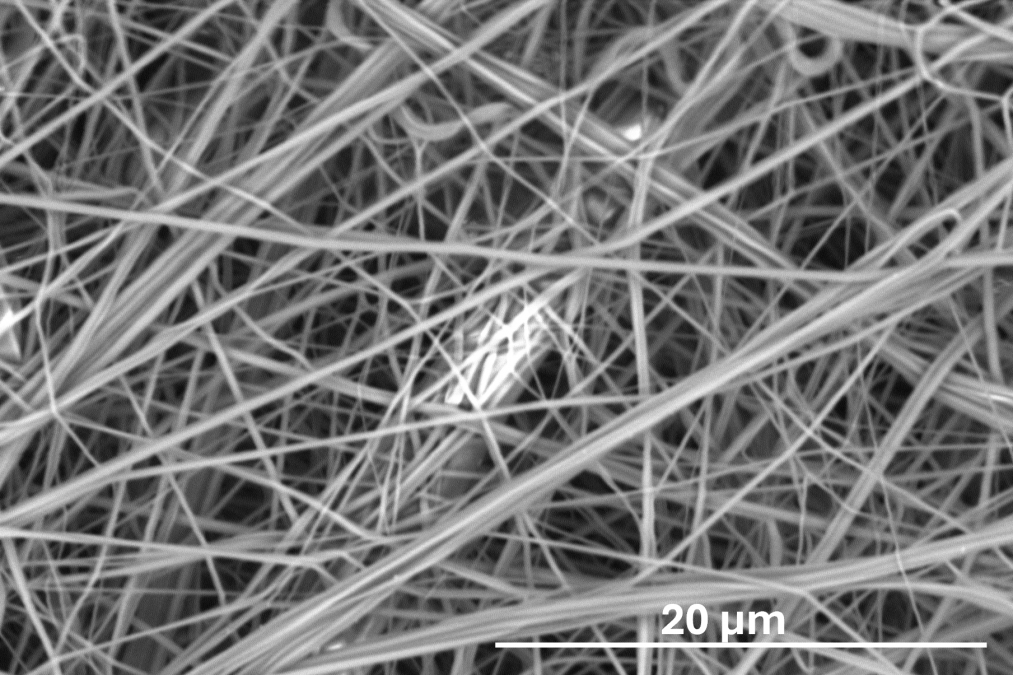
Hybrid Spinning is a technology to create nanofibers from a solution of a polymer and a solvent, using forces of centrifugal spinning and electrospinning in combination, that's why it's called hybrid spinning. Taking a solution in which you dissolve a polymer, this solution is entered into a rotating disc-like or oval shaped spinning head. This spinning head is rotating approximately from 1000 to 6000 rpm in a minute. With the centrifugal force it is forced out of the spinning head, where the electrostatic charges begin to apply creating fiber, the fiber or the solution is evaporating the solvent and is deponated on top of a fabric, where it gets collected, creating a nanofiber membrane. In INERRANT this membrane is applied as a sandwich stacked membrane with one lower temperature and one higher temperature melting point. When the battery exceeds a certain temperature, the lower temperature membrane is going to melt and stop the process of overheating before more damage occurs within the battery.
L
Li-ion Transport
Lithium ions (Li-ions) are lithium atoms that have lost an electron and therefore carry a positive charge. In many materials, especially those used in batteries, these ions can move through the solid structure. They do this by “hopping” from one position to a neighbouring empty position. Each hop requires a certain amount of energy, so the structure of the material plays an important role in how easily the ions can move. This is a bit like a game of musical chairs where there is always one empty seat: an ion can move into the empty spot, leaving another space behind for the next ion to move into. How easily lithium ions move is very important. Faster movement allows batteries to charge and discharge more quickly, while slower movement can limit performance.
N
Nano-Materials Combinations
To build better batteries, we use Laser Synthesis to create 'Super-Materials' – like Silicon nanoparticles. It’s like using a high-tech laser to 'cook' ingredients at a scale a thousand times smaller than a human hair. By combining these tiny structures, we create materials that act like a sponge, holding much more energy than traditional ones. It’s the secret to making batteries smaller, lighter, and much more powerful.
P
Pouch Cells
Pouch cells are a different type of battery shape and packaging. Instead of being rigid and hard, they are more flat and flexible, which reduces the space and their weight, which makes them easier and lighter to be integrated in devices and applications.
S
Smart Separators
A battery separator is a porous membrane, mainly composed of a three-layer composite of polypropylene and polyethylene, that physically separates the anode from the cathode. Its function is to prevent short circuits by physically preventing lithium dendrites from growing across the electrodes, while still allowing lithium ions to diffuse during charging and discharging. The separator also plays a vital role in battery safety and performance because it melts, acting as a shutdown mechanism, at around 130°C, which helps prevent thermal runaway. Traditional separators have difficulties in meeting the performance of new battery technologies. Smart separators can enhance performance in several ways but are especially important for thermal management. They can help detect temperature rises early, include fire-retardant additives, or contain active components that react with free lithium ions above critical temperatures to form stable compounds, thus enhancing safety.
T
Thermal Runaway
What happens inside a battery if it overheats or even catches fire and how can we prevent that from happening? Thermal Runaway is a phenomenon that happens in battery cells, often after a shock or a rupture in the battery cell envelope. It consits of the release of the energy contents in the battery itself, in a very short time, heating up a battery very quickly to very high temperatures, over 500°C. Watch the video to learn more and what we are working on to prevent Thermal Runaway.
U
Upscaling
Upscaling means moving from lab scale to large scale manufacturing. It is about taking the successful lab results and bringing them to the market for a real life application and meeting them in our everyday life.
V
Virgin Materials vs. Recovered Materials
Virgin materials are those obtained from primary resources, such as ores (iron, cobalt, and nickel) or brine and minerals, in the case of lithium. Virgin materials are well characterised, and their physicochemical properties, such as impurity levels, are tailored to meet the specific criteria and demands of required applications. Recovered materials, on the other hand, are obtained through recycling end-of-life products, such as via hydrometallurgical recycling of lithium-ion batteries in INERRANT. In batteries, recycling aims to recover materials (graphite, metals, etc.) at a so-called “battery-grade level,” meaning they meet the strict property standards of virgin materials and can be reused in battery manufacturing, supporting the circular economy. Achieving the necessary purity for recovered materials can be both economically and technologically expensive. As a result, recovered materials are often suitable for products that require lower-purity levels, enabling cost-effective reuse of battery components.